What is Copper Foil Flexible Busbar and Its Applications?
In recent years, the demand for Copper Foil Flexible Busbars has surged, driven by advancements in electronics and renewable energy. According to a report from ResearchAndMarkets, the global busbar market is expected to reach $30 billion by 2025, highlighting the growing importance of efficient electrical connections. Copper Foil Flexible Busbars, known for their lightweight and high conductivity, play a crucial role in this transformation.
These busbars are becoming integral in applications ranging from electric vehicles to solar power systems. Their flexibility allows for easy integration into compact designs while ensuring reliable performance. As industries shift towards greener technologies, the advantages of Copper Foil Flexible Busbars become increasingly evident. However, challenges remain in terms of manufacturing processes and material costs, emphasizing the need for ongoing innovation in this area.
While many manufacturers have embraced Copper Foil Flexible Busbars, not all products meet the high standards required. Companies must navigate quality assurance practices to ensure safety and effectiveness. Continuous research indicates that improving the production methods can lead to more durable solutions. As the industry evolves, the importance of Copper Foil Flexible Busbars will only grow, necessitating both expertise and quality control in their development.
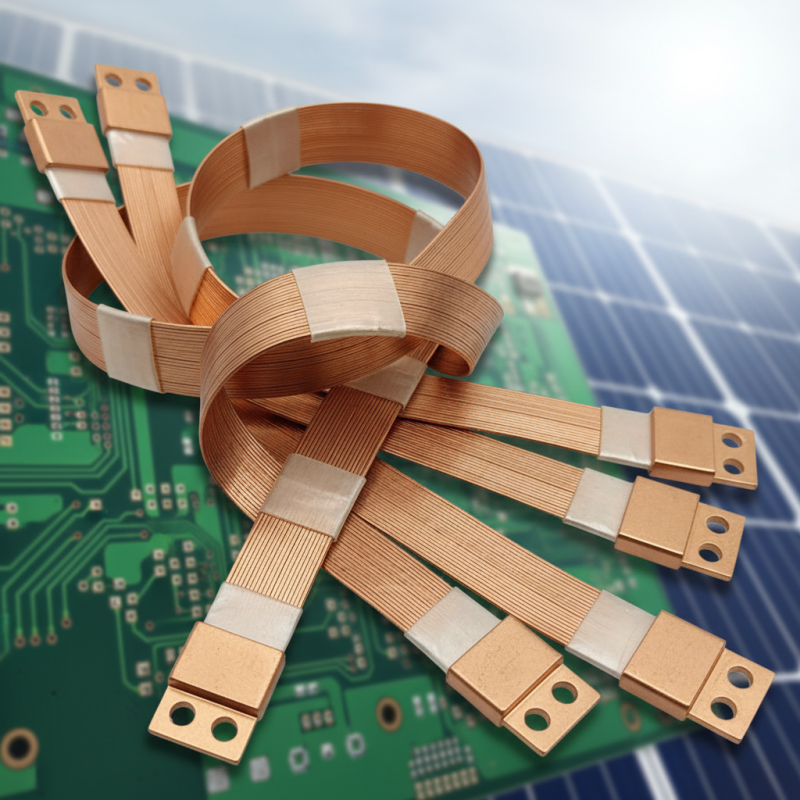
What is Copper Foil Flexible Busbar?
Copper foil flexible busbars are essential components in modern electrical systems. Unlike traditional rigid busbars, they offer superior flexibility and adaptability. This enables efficient power distribution in various applications. The thin, flexible design allows for intricate layouts in tight spaces, making installation easier in complex systems.
These busbars are primarily made from high-purity copper. They conduct electricity efficiently, minimizing energy loss. Their lightweight nature helps reduce the overall weight of electrical assemblies. Additionally, they can withstand thermal fluctuations, ensuring durability and reliability. However, improper handling can lead to damage or performance issues.
In electric vehicles, copper foil flexible busbars play a key role. They connect batteries to various electronic components, ensuring stable connections. In renewable energy systems, such as solar panels, these busbars help manage power distribution effectively. The versatility of copper foil flexible busbars makes them a vital part of future electrical designs. Yet, users must be cautious about environmental factors that could impact their performance over time.
Key Features of Copper Foil Flexible Busbar
Copper foil flexible busbars are emerging as essential components in various electrical applications. These busbars exhibit significant advantages due to their lightweight nature and high conductivity. They can flex and adapt to different configurations, making installation effortless. According to a recent report by Smithers Pira, the flexible busbar market is projected to reach $1.5 billion by 2026. This growth highlights the rising demand across industries like renewable energy and electric vehicles.
One key feature of copper foil flexible busbars is their excellent thermal management capabilities. They can dissipate heat efficiently, reducing the risk of overheating in electrical systems. This is particularly important in high-power applications. The typical thermal resistance can be significantly lower than traditional busbars. Additionally, these busbars are resistant to corrosion, which extends their lifespan. However, the manufacturing process can lead to variations in conductivity, creating inconsistencies in performance. Ensuring quality control throughout production is crucial to maximize reliability.
The flexibility of these busbars allows for creative and space-efficient designs in complex electrical layouts. They can be easily adapted to fit within compact spaces, a critical requirement in modern technology. Nevertheless, not every design performs optimally under different conditions, prompting engineers to consider the specific requirements of each application. As the industry continues evolving, refining these designs will be vital to address the challenges of more demanding electrical environments.
Advantages of Using Copper Foil Flexible Busbar
Copper foil flexible busbars are becoming increasingly popular in various industries. Their lightweight and adaptable nature allows for efficient electrical connections. This flexibility can lead to innovative designs and improved space utilization in electrical systems.
One notable advantage is their excellent conductivity. Copper is known for its high electrical conductivity, which reduces energy loss. This can result in higher efficiency in applications ranging from renewable energy systems to electric vehicles. Moreover, these busbars can be molded into different shapes, making them suitable for intricate designs in tight spaces.
Tips: When considering copper foil flexible busbars, check the thickness and flexibility. Not all applications require the same specifications. It’s essential to define your specific needs carefully. Also, remember that while these busbars are effective, their installation may present a learning curve. Understanding proper handling is key to avoiding potential installation issues.
Common Applications of Copper Foil Flexible Busbar
Copper foil flexible busbars are increasingly popular in various industries. Their versatility makes them ideal for electric vehicles, renewable energy systems, and power distribution applications. These busbars provide a reliable solution for connecting and distributing electrical power efficiently.
In electric vehicles, copper foil flexible busbars help minimize weight while ensuring excellent conductivity. They can be easily bent and shaped to fit complex designs, which is essential for the compact spaces in automotive applications. Furthermore, they enhance thermal management, preventing overheating.
For renewable energy systems, such as solar panels and wind turbines, these busbars play a crucial role. They connect multiple photovoltaic cells or turbine elements, offering excellent performance and reliability. The flexibility of the busbars allows for easy integration into various designs, optimizing energy transfer.
Tip: When selecting copper foil flexible busbars, consider the thickness and width. These factors influence conductivity and flexibility. Always consult with experts to ensure the right specifications for your application.
Another application is in consumer electronics. Devices like laptops and smartphones benefit from the lightweight and high conductivity of these busbars. They help designers create slimmer, more efficient devices without compromising power distribution.
Tip: Regularly check the connections of busbars in high-use devices. Loose connections can cause overheating or reduce efficiency, leading to performance issues.
Comparison with Traditional Busbar Systems
Copper foil flexible busbars offer several advantages over traditional busbar systems. They are lightweight and adaptable, making installation easier in confined spaces. Unlike rigid busbars, copper foil can bend and conform to various shapes. This flexibility reduces the need for complex fittings, which can save time and cost during installation.
Traditional busbars, while reliable, often face challenges such as weight and inflexibility. Their bulky structure can complicate routing through crowded electrical cabinets. Additionally, they typically require more extensive labor for installation. In contrast, flexible busbars allow for streamlined designs. They can accommodate dynamic movements in applications like electric vehicles and renewable energy systems.
However, using flexible busbars is not without challenges. The reliability over time, especially in high-stress environments, requires careful consideration. Manufacturers need to ensure that the connections remain stable under various conditions. Regular assessments are essential to avoid potential failures. This evolving technology still needs refinement to fully replace traditional systems in all scenarios.
Comparison of Copper Foil Flexible Busbar vs Traditional Busbar Systems
The bar chart above compares the performance metrics of Copper Foil Flexible Busbars and Traditional Busbar Systems. It focuses on two key parameters: electrical conductivity measured in megasiemens per meter (MS/m) and weight in kilograms per meter (kg/m). Copper Foil Flexible Busbars show comparable conductivity with a significantly lower weight, highlighting their advantages in various applications.
