How to Choose Superior Steel for Your Projects?
Choosing the right steel for your projects is crucial. Superior steel can significantly impact the durability and success of your work. Understanding the properties of different steel types is essential for making informed decisions.
Superior steel offers strength and resilience. It can withstand harsh conditions, ensuring that your structures last longer. It is important to consider factors like corrosion resistance and tensile strength. Each project requires specific steel characteristics to meet your needs.
Consider the application before selecting superior steel. If you overlook specific requirements, you may face issues later. Research and consult experts to avoid costly mistakes. Always aim for quality, as inferior steel can lead to failures. Reflect on your choices, as each project is a learning experience.
Understanding Different Types of Steel and Their Properties
Choosing the right type of steel for your project can be challenging. There are many options to consider, each with its own set of properties. For instance, carbon steel is known for its strength. However, it can be brittle and may not perform well in extreme conditions.
Stainless steel offers excellent corrosion resistance. It contains elements like chromium and nickel, giving it a unique finish. This type of steel is ideal for applications in humid environments. According to industry research, about 70% of stainless steel is used in construction and automotive sectors. However, it often comes at a higher cost, which can affect budget considerations.
Alloy steels provide a balance between strength and ductility. These steels are mixed with other elements to enhance performance. Data shows that their toughness can increase by up to 20% compared to carbon steel. However, they may require special welding techniques and not all vendors carry them. Understanding these nuances can lead to better decisions.
Comparison of Different Types of Steel by Yield Strength
Evaluating Mechanical Properties for Project Requirements
When selecting steel for a project, mechanical properties are critical. These properties define how steel will perform under various conditions. Tensile strength, yield strength, and ductility are key factors. For instance, high tensile strength is essential for structures under stress. A good example is beams in buildings, where weight and tension matter.
Ductility is equally important. This property allows steel to deform without breaking. It is crucial for projects that require bending or shaping. Choosing steel with low ductility can lead to catastrophic failures. It's vital to consider these properties in relation to your project’s specific needs. Each application is unique, and what works in one scenario may not work in another.
Evaluate the type of loads your steel will face. For high-stress environments, look for steel grades that meet those demands. However, the exact choice may vary. Many factors, such as cost and availability, can complicate decisions. There might be a tendency to overlook long-term effects. Always reflect on how the steel will perform over time. This thought process can uncover potential weaknesses or advantages.
How to Choose Superior Steel for Your Projects?
| Steel Type |
Yield Strength (MPa) |
Tensile Strength (MPa) |
Elongation (%) |
Application |
| Carbon Steel |
250 |
400 |
20 |
General Structural Use |
| Alloy Steel |
300 |
450 |
18 |
High-Strength Applications |
| Stainless Steel |
210 |
520 |
30 |
Corrosion-Resistant Structures |
| Tool Steel |
350 |
600 |
12 |
Manufacturing Tools |
| Mild Steel |
200 |
350 |
25 |
Welding and Fabrication |
Assessing Corrosion Resistance in Steel Materials
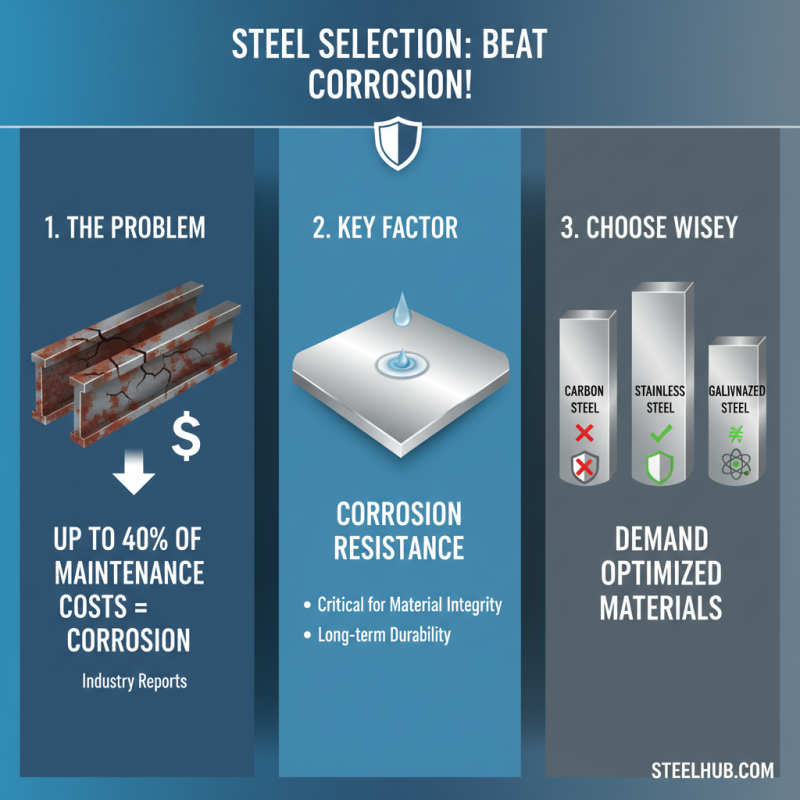
Choosing the right steel for your project demands careful consideration. Corrosion resistance is a critical factor in maintaining the integrity of materials. According to industry reports, up to 40% of the maintenance costs in construction are related to corrosion issues. This should not be underestimated.
Some steel types offer better corrosion resistance than others. For instance, stainless steel, with a chromium content above 10.5%, significantly reduces rust formation. On the other hand, carbon steel, while strong and affordable, tends to corrode easily. Regular inspections can help, but even small scratches can pave the way for deterioration.
The environment plays a huge role too. Steel used in coastal areas faces more severe corrosion due to salt exposure. A study indicated that carbon steel’s life span could reduce by half in such conditions. Some might overlook these factors, leading to costly mistakes. We must question our choices and reassess our understanding of material properties to avoid future pitfalls.
Cost-Effectiveness: Balancing Quality and Budget in Steel Selection
When selecting steel for your project, cost-effectiveness plays a significant role. Balancing quality and budget is crucial. High-quality steel often comes with a higher price tag. Yet, opting for cheaper alternatives may lead to future expenses. Structural failures or excessive maintenance can result from using inferior materials. Analyze the long-term costs, not just the initial price.
Consider different grades and types of steel available. Some may offer better performance but at a premium cost. It’s essential to scrutinize the specifications. Durability, corrosion resistance, and weight capacity can directly affect your project's success. Sometimes, the less expensive option might not meet the necessary standards. Research and gather information before making a decision.
Reflect on your project's specific needs. Have you prioritized the right attributes? Are you focused solely on the upfront cost? There’s a balance to be found. Evaluate trade-offs between quality and budget. Often, investing a bit more initially can lead to savings down the line. This thought process is vital for making informed choices.
Sourcing and Certification: Ensuring Quality in Steel Procurement
Sourcing high-quality steel is vital for construction and manufacturing.
Poor-quality steel can lead to structural failures. According to industry reports, around 15% of steel used globally does not meet quality standards. This raises concerns for project safety and durability.
Ensuring quality in steel procurement starts with certification. Look for standards like ISO 9001 and ASTM. These certifications provide a framework for quality management.
However, not all suppliers are transparent. Some might claim certification without proper evidence. Verify documents and ask for test results from credible labs.
Another aspect to consider is sourcing methods. Local procurement can reduce costs. Yet, it may limit quality options.
International suppliers could offer superior materials but come with longer lead times.
Balancing cost and quality can be tricky. Take time to assess all suppliers thoroughly. Mistakes in sourcing can lead to project delays and budget overruns.