2026 Best Steel Wire Types for Strength and Durability in Construction?
In the construction industry, the choice of materials is critical for ensuring strength and durability. Steel wire is a key component in reinforced concrete structures, providing the necessary tensile strength to withstand various forces. According to a report by the American Institute of Steel Construction, the demand for high-quality steel wire has increased significantly due to growing infrastructure projects.
It's essential to understand the different types of steel wire available. Many factors influence their performance, including composition, tensile strength, and fatigue resistance. The ASTM International, a globally recognized standards organization, emphasizes that selecting the right type of steel wire can significantly enhance structural integrity and longevity. The ongoing development in metallurgical science leads to continuous improvements in steel wire products.
While many companies strive to meet high safety and quality standards, there are still challenges in the industry. Small variations in manufacturing processes can lead to inconsistencies in the wire's performance. This emphasizes the need for rigorous testing and quality control to ensure that steel wire meets construction requirements. As the industry evolves, the right choice of steel wire remains paramount for successful construction projects.
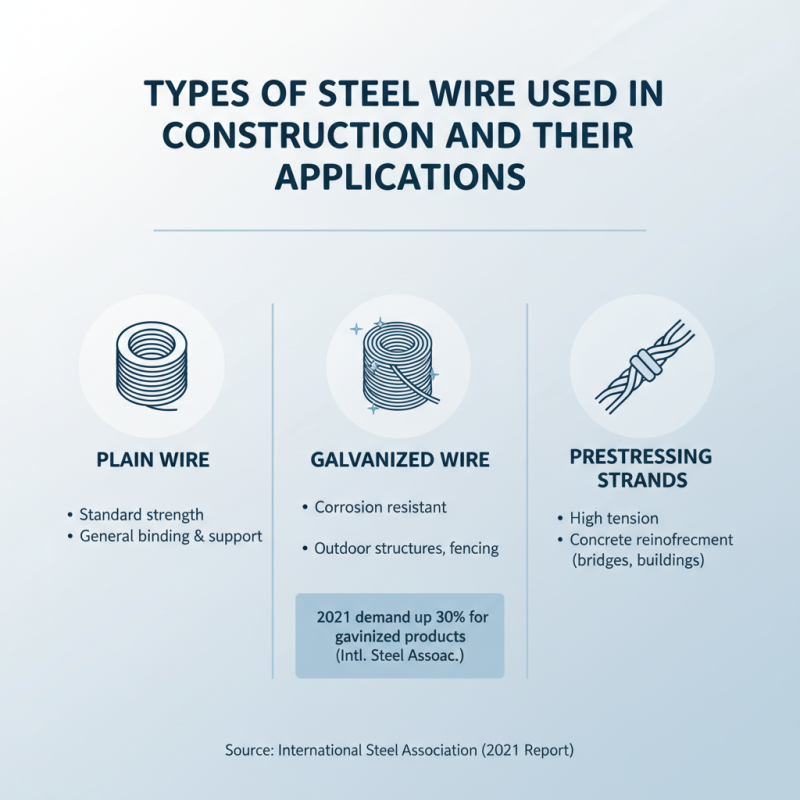
Types of Steel Wire Used in Construction and Their Applications
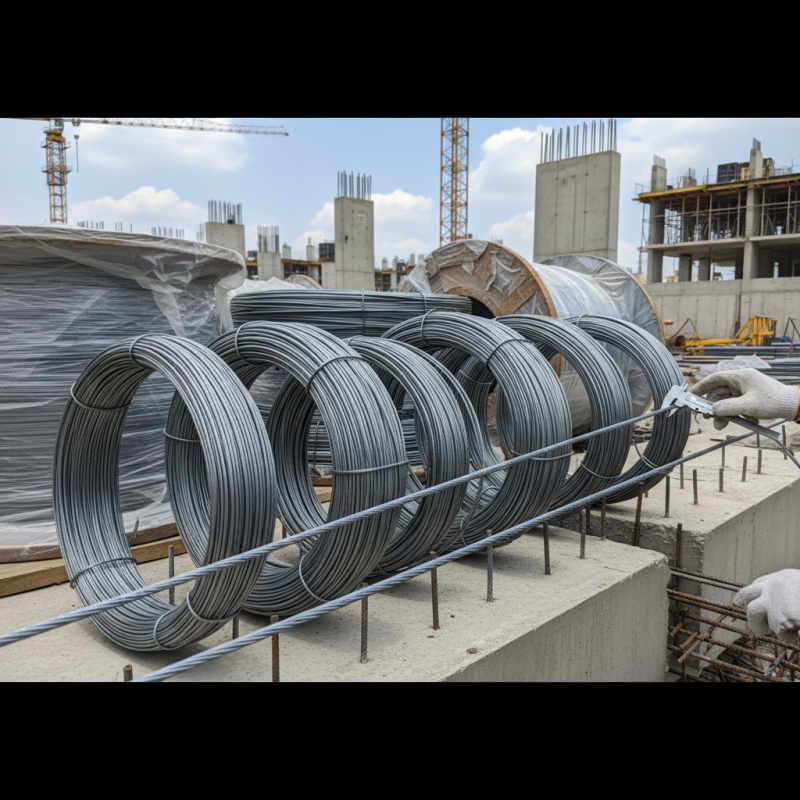
In construction, choosing the right steel wire type is crucial for achieving strength and durability. Commonly used steel wires include plain wire, galvanized wire, and prestressing strands. Each type has unique properties suited for specific applications. For instance, galvanized wire offers excellent resistance to corrosion, making it ideal for outdoor projects. A 2021 report from the International Steel Association noted a 30% increase in the demand for galvanized products in construction.
Plain steel wire finds its application in reinforcing concrete structures. It provides essential tensile strength to buildings. Reinforced concrete has been shown to handle loads effectively, reducing the risk of structural failure. According to data from the American Concrete Institute, the use of steel reinforcement can increase a structure's lifespan by up to 50 years when designed properly. However, improper application of steel wire can lead to vulnerabilities.
Prestressing strands are vital in applications requiring high-strength support. These wires are designed under tension to improve load-bearing capacity. Yet, they require precise installation techniques. Misalignment during installation can compromise their effectiveness. The National Institute of Standards and Technology highlights that only 70% of projects meet the required standards when these strands are incorrectly applied. Understanding these nuances in wire types can significantly impact project outcomes.
Key Properties of Steel Wire for Strength and Durability
In construction, the choice of steel wire is crucial. Key properties significantly impact both strength and durability. Tensile strength is one major factor, with high-quality steel wires boasting ratings from 300 MPa to over 1,500 MPa. This range indicates potential for various construction conditions, ensuring materials withstand heavy loads.
Another crucial attribute is elongation at fracture. This property determines how much the wire can stretch under traction before breaking. Optimally engineered wires often achieve elongation rates of 10% to 30%. Such flexibility helps absorb shock and prevents catastrophic failures during use.
Corrosion resistance must not be overlooked. Steel wires with protective coatings can enhance longevity against environmental factors. A 2023 report from the American Society of Civil Engineers noted that corrosion can reduce lifespan by 30% in untreated wires. Therefore, selecting the right type of steel wire can make a difference in operational longevity and safety.
Comparative Analysis of Steel Wire Grades in Construction
When evaluating steel wire grades for construction, understanding their strengths is crucial. High carbon steel wires, like those graded as ASTM A313, are noted for their tensile strength, which can reach up to 1,300 MPa. These wires are commonly used in applications requiring enhanced durability. However, they may lack ductility, which can lead to brittleness under certain conditions.
Additionally, low carbon steel wires, often classified under ASTM A228, provide excellent flexibility and are ideal for applications such as wire ropes or reinforcement in concrete. Their tensile strength averages around 700 MPa, making them suitable for structures that experience dynamic loads. Yet, their lower strength compared to high carbon wires raises concerns in high-stress environments.
Steel wire grades must also consider corrosion resistance. Stainless steel wires exhibit improved longevity, with many featuring resistance to rust and environmental degradation. This attribute is vital in coastal areas, where moisture becomes a critical factor. The trade-offs in wire selection emphasize the need for a meticulous approach to ensure the right balance between strength, flexibility, and resistance in construction projects.
2026 Best Steel Wire Types for Strength and Durability in Construction
| Wire Type |
Yield Strength (MPa) |
Tensile Strength (MPa) |
Elongation (%) |
Application |
| Low Carbon Steel Wire |
250 |
350 |
20 |
Reinforcement |
| High Carbon Steel Wire |
450 |
550 |
10 |
Construction Cables |
| Stainless Steel Wire |
300 |
600 |
30 |
Corrosion Resistance |
| Pre-Stressed Steel Wire |
600 |
1000 |
5 |
High Load Beams |
| Galvanized Steel Wire |
270 |
420 |
15 |
Fencing and Grids |
Impact of Wire Diameter and Coating on Performance
When selecting steel wire for construction, both wire diameter and coating play crucial roles. The diameter affects strength directly. Thicker wires can withstand higher tensile and compressive forces. However, the increase in weight and cost must be considered. A common mistake is choosing diameter based solely on strength without evaluating overall project requirements.
Coating is equally important. It enhances rust resistance and extends the wire’s lifespan. Galvanized or epoxy coatings provide protection against environmental factors. But the choice of coating should align with the construction site’s exposure to moisture or chemical elements. This means factoring in local conditions. Not all coatings are suitable for every application.
Tips: Always conduct a thorough analysis of the construction environment before making decisions. Evaluate any compromises between strength and weight. Regular inspections of wires can help identify potential issues early. Keeping records of wire performance can aid in future projects.
2026 Best Steel Wire Types for Strength and Durability in Construction
This chart illustrates the relationship between wire diameter and tensile strength for various steel wire types. As the diameter of the wire increases, the tensile strength typically improves, making thicker wires more suitable for heavy-duty construction applications.
Future Trends in Steel Wire Technology for Building Projects
The evolution of steel wire technology is reshaping the construction industry. As projects demand greater strength and durability, innovative materials are becoming essential. Recent studies indicate that advanced cold drawn steel wire exhibits a tensile strength increase of up to 30% compared to traditional options. This enhanced strength ensures that structures can withstand extreme conditions, a critical factor as climate variability continues to affect modern construction.
Moreover, trends towards sustainable practices are becoming more pronounced. Some manufacturers are focusing on recycled steel in their wire production. Reports suggest that using recycled materials can reduce carbon emissions by nearly 50%. This shift challenges traditional production methods while promoting an eco-friendly approach. However, sourcing reliable recycled steel can be inconsistent, raising concerns about quality control.
Meanwhile, the integration of smart technology is gaining traction. Researchers are exploring smart steel wires embedded with sensors to monitor structural integrity in real-time. This innovation could revolutionize maintenance practices, enabling proactive solutions to potential failures. Yet, the cost implications and implementation complexities remain hurdles that require careful consideration from stakeholders. It is essential to balance innovation with practicality in building projects.